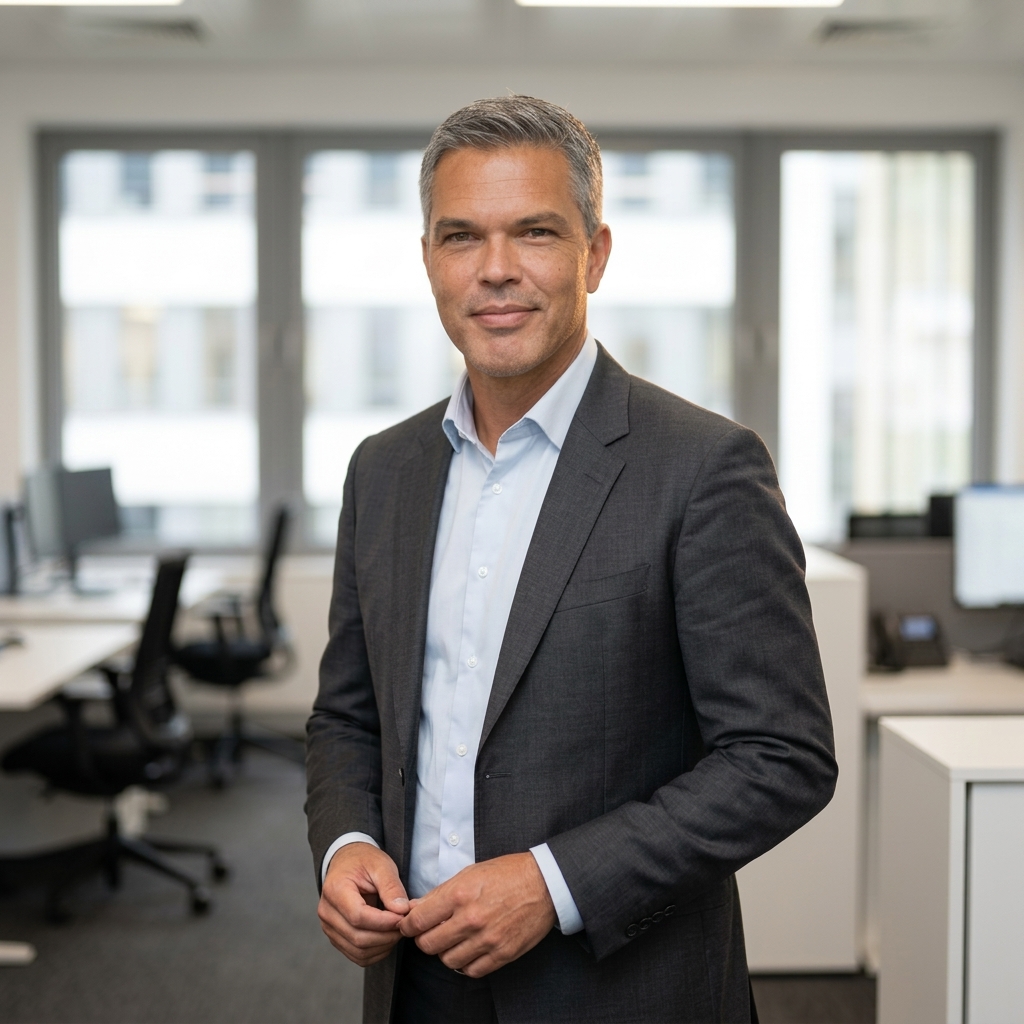
Building AI systems for business.
Since 2018.
I embed as a fractional AI executive inside growing companies — owning the strategy, evaluating the tools, and making sure every automation dollar drives measurable ROI. Founder of ZenAgentic. VP-level insurance operations leader for 20+ years.
Most AI initiatives fail because they're treated as experiments, not operations.
Most AI initiatives die the same death: a vendor sells a tool, nobody owns the strategy, and six months later the license is shelfware.
I've spent two decades in VP-level insurance operations — regulated, high-stakes environments where a process failure carries real financial and compliance consequences. Since 2018, I've applied that same discipline to building AI systems, well before the current wave made it fashionable. That timing means I've watched AI hype cycles rise and crash more than once. I don't chase tools. I build systems that survive past the hype.
That's why I serve as a Fractional Chief AI Officer — embedding into leadership teams to own the AI roadmap, evaluate every vendor decision, and ensure implementation drives measurable return within 90 days. ZenAgentic handles execution when execution is needed. I handle the thinking.
The companies that treat AI as an operating discipline, not an experiment, are the ones still standing when the hype cycle ends.
Three ways to engage.
One embedded operator. Three depths of engagement — from a single decision to a standing seat at your leadership table.
Fractional Chief AI Officer
A senior AI executive embedded in your leadership team. I own the AI roadmap, evaluate every vendor, and deliver board-ready guidance month over month — at a fraction of a full-time hire.
Strategy Intensive
One high-stakes AI decision. [X] minutes with a senior operator who has spent two decades making high-consequence calls in regulated operations. Written assessment within 24 hours. Full credit toward the retainer.
Speaking & Thought Leadership
Keynotes, workshops, and panels on AI strategy, operational discipline, and building systems that survive past the hype cycle. Grounded in real deployments dating back to 2018 — not recycled conference slides.
Documented outcomes, in motion.
[Outcome headline]
[One-line real result].
[Outcome headline]
[One-line real result].
[Outcome headline]
[One-line real result].
[Outcome headline]
[One-line real result].
Measurable AI ROI in ninety days, without the [X] hire.
Seven steps, in order, each ending in a written artifact you can hand your leadership team tomorrow: an honest readiness score, a one-page AI policy, one automated workflow with a measured return, a vendor scorecard, and a board update with real numbers and zero adjectives.
Recent essays.
What Is a Fractional Chief AI Officer? A Complete Guide
A comprehensive breakdown of the role, accountabilities, engagement formats, and when it makes financial sense for a growing company.
Does My Company Actually Need a Chief AI Officer?
Most companies asking this question do not need a full-time hire. Here is the operational framework to determine what level of leadership you require.
What Building AI Systems Since 2018 Taught Me About This Hype Cycle
Lessons from deploying production systems before generative AI made strategy fashionable, and why process discipline always outlasts technology theater.
If our values align, let's build something.
Whether you're exploring AI strategy, looking for a speaker, or just want to connect — I read every message personally and respond within [X hours].
Get in touchCommon questions.
What does a fractional Chief AI Officer actually do?
A fractional CAIO holds a standing seat on your leadership team and owns the strategic AI decisions: which use cases to fund, which vendors to buy, how governance works, and whether spend produced a measurable return. It is an executive accountability role, not a project deliverable.
How is this different from hiring an AI consultant?
A consultant is engaged for a defined project and is evaluated on the presentation they hand over. A fractional CAIO is embedded into recurring operations, attends leadership meetings, and is evaluated on whether your organization's AI capability and returns improve over time.
What size company is this built for?
Typically growing businesses doing [$1M–$30M] in revenue that have begun investing in AI tools but lack internal executive leadership to guide the investments and evaluate vendors objectively.
Do we need a dedicated data team already in place?
No. In businesses without technical staff, more of the early work centers on vendor evaluation and process readiness rather than custom software builds. Deciding what to buy versus build is part of the core mandate.
How quickly should we expect measurable results?
The first 90 days are designed to produce actionable decisions and measurable operational baselines. Transformation is an ongoing discipline; operational clarity should be established within the first quarter.
Field notes from the front line.
Periodic essays on AI strategy, operational discipline, and building systems that hold up under pressure. No fluff. Unsubscribe anytime.